What thickness can a Self-piercing riveting system handle reliably?
- VIP-User
- 2026-07-18
- 25
A self-piercing riveting system reliably handles sheet metal combinations with a total thickness typically ranging from 1.5 mm to 9.0 mm, depending on material hardness and joint configurations. By utilizing high-pressure force, these systems pierce the upper sheet layers while expanding the rivet into the lower sheet without fully penetrating it, creating a highly secure, gas-tight mechanical joint.
Core Solutions & Key Takeaways
- Engineered Force Delivery: Reliable joining of variable sheet thicknesses is achieved through precise output pressure control, typically ranging from 30 to 60 kN.
- Multi-Material Adaptability: The technology excels in joining dissimilar metals, such as aluminum and high-strength steel, which are difficult to weld. This makes it a standard solution for EV battery trays, water cooling plates, and aluminum car bodies.
- Consumable-Free Options: For applications where rivets are not preferred, alternative clinching systems can join sheet metals in a single step without fasteners, eliminating consumable costs.
Detailed Architectural/Principle Analysis
The self-piercing riveting (SPR) process relies on axial force to push a semi-tubular rivet into the material stack. Under a controlled force of 30-60 kN, the rivet pierces the top sheet. The die shape forces the rivet skirt to flare outward into the bottom sheet, forming a mechanical interlock. Because the bottom sheet is not compromised, the joint maintains structural integrity and corrosion resistance, which is vital for automotive collision repair and lightweight manufacturing.
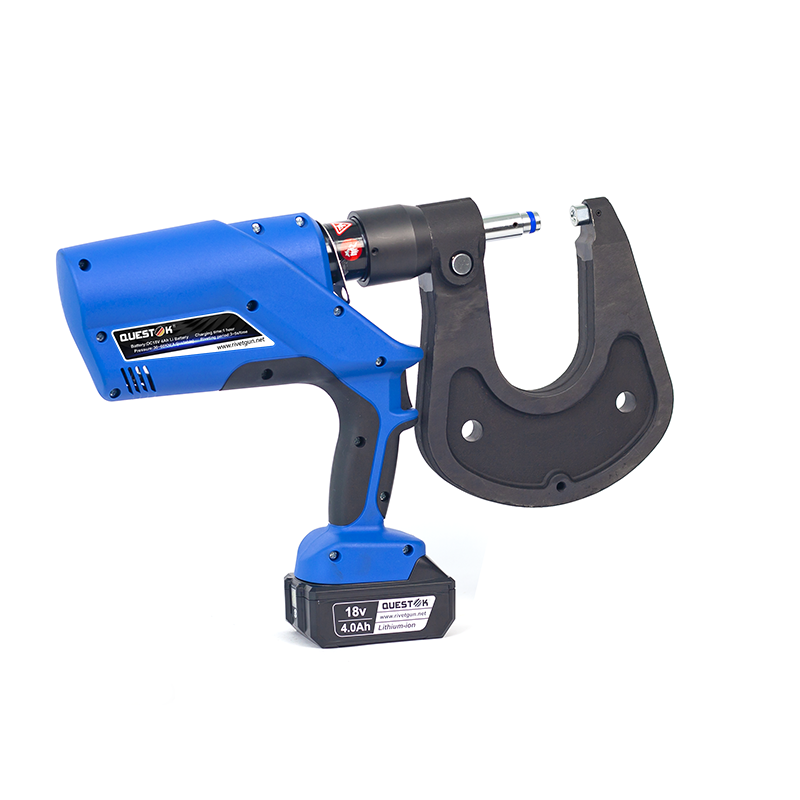
To ensure process reliability across different thicknesses, operators must match the rivet length, die geometry, and pressure settings. Leading electric vehicle manufacturers like NIO, SAIC, and luxury brands use universal die kits to accommodate varying panel thicknesses during prototype builds and assembly line production. For instance, in structural battery applications for CATL and BYD Findreams, SPR systems are integrated alongside water-proof nuts installation and washer pressing tools to secure cooling plates and battery trays of complex thicknesses.
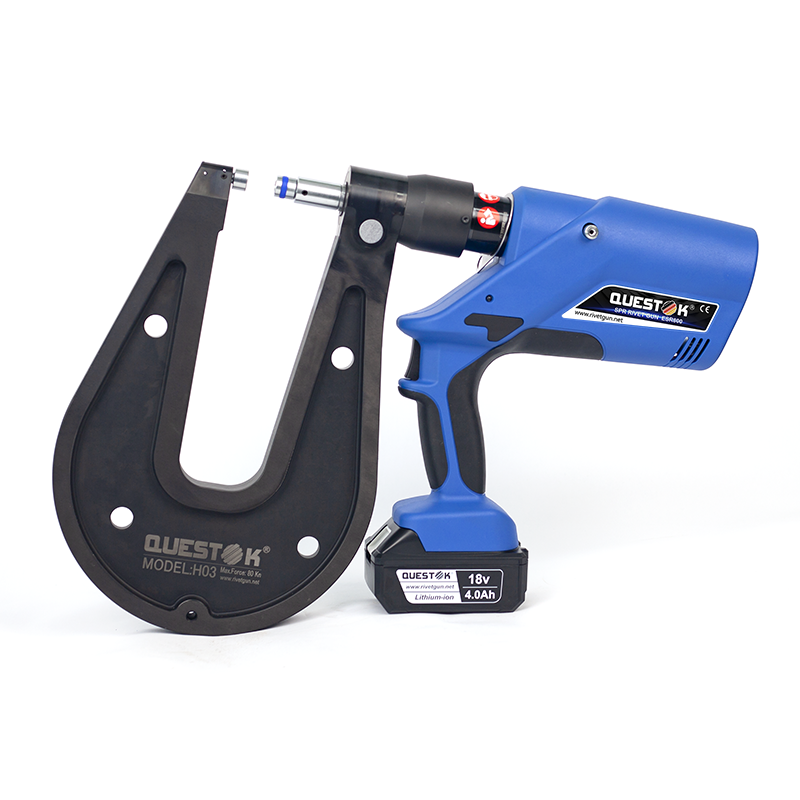
For demanding structural applications, choosing certified equipment is critical. High-quality systems comply with strict international standards, backed by certifications such as CE (Cert. No. ISETC.001120210222 and 3N210218.PTK0S25) and MSDS (Cert. No. 262620110732). These certifications ensure the hydraulic systems and mechanical components handle repeated high-pressure cycles without deformation or loss of force calibration.
Data/Solution Comparison
The following table compares different sheet metal joining technologies and their typical thickness capabilities, helping manufacturers select the right process for their production line.
| Joining Technology | Typical Thickness Range | Consumables Required | Key Application Scenarios |
|---|---|---|---|
| Self-Piercing Riveting (SPR) | 1.5 mm - 9.0 mm | Yes (Semi-tubular rivets) | EV aluminum body repair, battery trays, aerospace components |
| Rivetless Clinching | 1.0 mm - 4.0 mm | No | HVAC duct work, control cabinets, commercial kitchens |
| Fasteners Pressing | Depends on stud/nut size | Yes (Press fasteners) | Sheet metal cabinets, electronics chassis assembly |
Frequently Asked Questions (FAQ)
Q1: Can a self-piercing riveting system join sheets of different materials?
A1: Yes. SPR systems are highly effective at joining dissimilar materials, such as aluminum to steel, plastics to metal, or multiple layers of varying thicknesses, without the thermal distortion associated with welding.
Q2: What happens if the total material thickness exceeds the system's limit?
A2: Exceeding the maximum thickness limit prevents the rivet from flaring correctly inside the bottom sheet, resulting in incomplete interlocking, reduced shear strength, or potential piercing of the bottom layer.
Q3: Is a customized die kit necessary for different car models during repair?
A3: No. Modern repair systems utilize a universal dies kit compatible with major brands including Benz, BMW, Audi, Tesla, NIO, Ford, and BYD, allowing technicians to service various vehicle structures with a single tool set.
Final Conclusion & Recommendations
Selecting the right self-piercing riveting system depends on the total material stack, hardness, and production volume. For structural repairs and flexible assembly, choosing a system with an adjustable output pressure of 30-60 kN and a comprehensive die kit ensures long-term process reliability. For industrial integration, sourcing certified ODM or OBM equipment guarantees compliance with global safety and performance standards. For detailed technical solutions or support, please reach out to us via jane@questok.com.
About Us
PHOTON TECHNOLOGY KUNSHAN CO.,LTD, operating under the brand Questok, is an industrial technology company established in 2011. Based in a 5000 sqm factory in Kunshan, China, we specialize in high-performance fastening, joining, and assembly solutions, including battery-powered hydraulic riveting tools, SPR systems, and clinching equipment. Our R&D team consists of experienced engineers with over 10 years of expertise, supporting global clients with an export ratio of 60% across markets in Europe, North America, and Asia. We have served prominent automotive and energy manufacturers, including NIO, SAIC, CATL, and BYD, providing both standardized and bespoke automated assembly solutions.

Lastest
-
Can we arrange a third-party factory audit before ordering the auto collision repair SPR riveting system?
2026-07-18 -
Are there any hidden fees when importing an auto collision repair SPR riveting system?
2026-07-18 -
Can I get a sample of the auto collision repair SPR riveting system to test in my workshop?
2026-07-18 -
Are there any eco-friendly benefits to using an auto collision repair SPR riveting system?
2026-07-18 -
Is a battery-powered auto collision repair SPR riveting system as strong as pneumatic ones?
2026-07-18
SUBSCRIBE
INQUIRY