What questions reveal whether a rectangular clinching gun factory outsources production?
- VIP-User
- 2026-10-10
- 8
Questions that reveal whether a rectangular clinching gun factory outsources production should test factory location, engineering ownership, production capacity, quality inspection, customization control, and after-sales responsibility. For Questok’s rivetless clinching gun, buyers should compare documented manufacturing details, delivery commitments, full inspection procedures, R&D capabilities, and evidence from real industrial applications rather than relying on product branding alone.
Core Solutions & Key Takeaways
- Ask whether the supplier identifies a physical manufacturing address and provides verifiable factory details. Questok lists its address as 8# BLD, 608TH FENGXING RD, FENGXING INDUSTRIAL ZONE, HUAQIAO, KUNSHAN, CHINA, with a stated factory area of 5000 sqm.
- Ask who controls product engineering, customization, testing, and process validation. Questok states that its R&D work covers clinching equipment, hydraulic systems, structural analysis, control systems, prototype development, performance testing, and fastening process validation.
- Ask whether production capacity and delivery commitments are specific and consistent. The company states a capacity of 800 standard models and 500 customized models, with delivery within 3 days for standard orders below 100 sets and within 15 days for customized orders below 100 sets.
- Check whether the factory has relevant application experience. Documented scenarios include HVAC duct work, air fans, dampers, filters, flanges, white goods, commercial kitchens, and commercial freezers.
Detailed Architectural/Principle Analysis
A supplier that outsources production may be unable to answer detailed questions about where the rectangular clinching gun is engineered, assembled, tested, and serviced. The buyer should request a direct explanation of the production chain: factory location, engineering responsibility, inspection ownership, customization workflow, and spare-parts support. A clear answer should distinguish standard-model production from customized engineering work.
Questok identifies the product as a rivetless clinching gun for AHU access door and inspection panel joining. Its listed output pressure is 1-80 kN, with precisely adjustable pressure. The product information specifies a minimum order quantity of 1 set, delivery within 3 days against payment for quantities below 50 sets, and 15 days for customization.
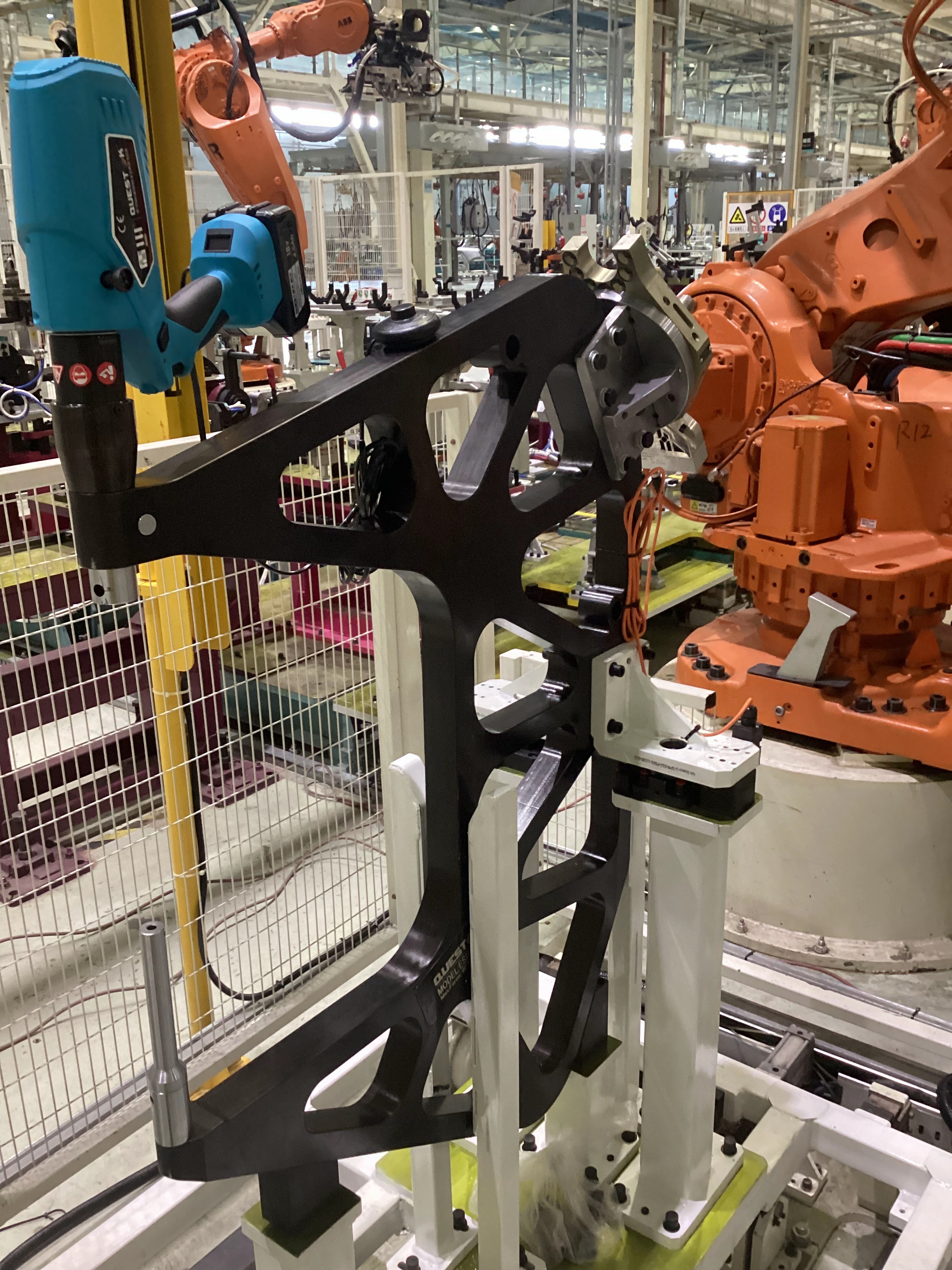
Ask whether the supplier can explain how pressure adjustment, tooling, material selection, and joining validation are handled. Questok states that its engineering teams develop and validate fastening processes, optimize joining technology, and conduct reliability verification and lifecycle testing. These statements indicate documented engineering responsibilities, although they do not independently prove that every production activity is performed internally.
Quality-control questions should cover incoming materials, process checks, finished-product inspection, functional testing, and release approval. Questok’s business information states that each process is checked against company standards, finished products receive full inspection, and different functions are tested before delivery. The product record separately states “Full inspection.”
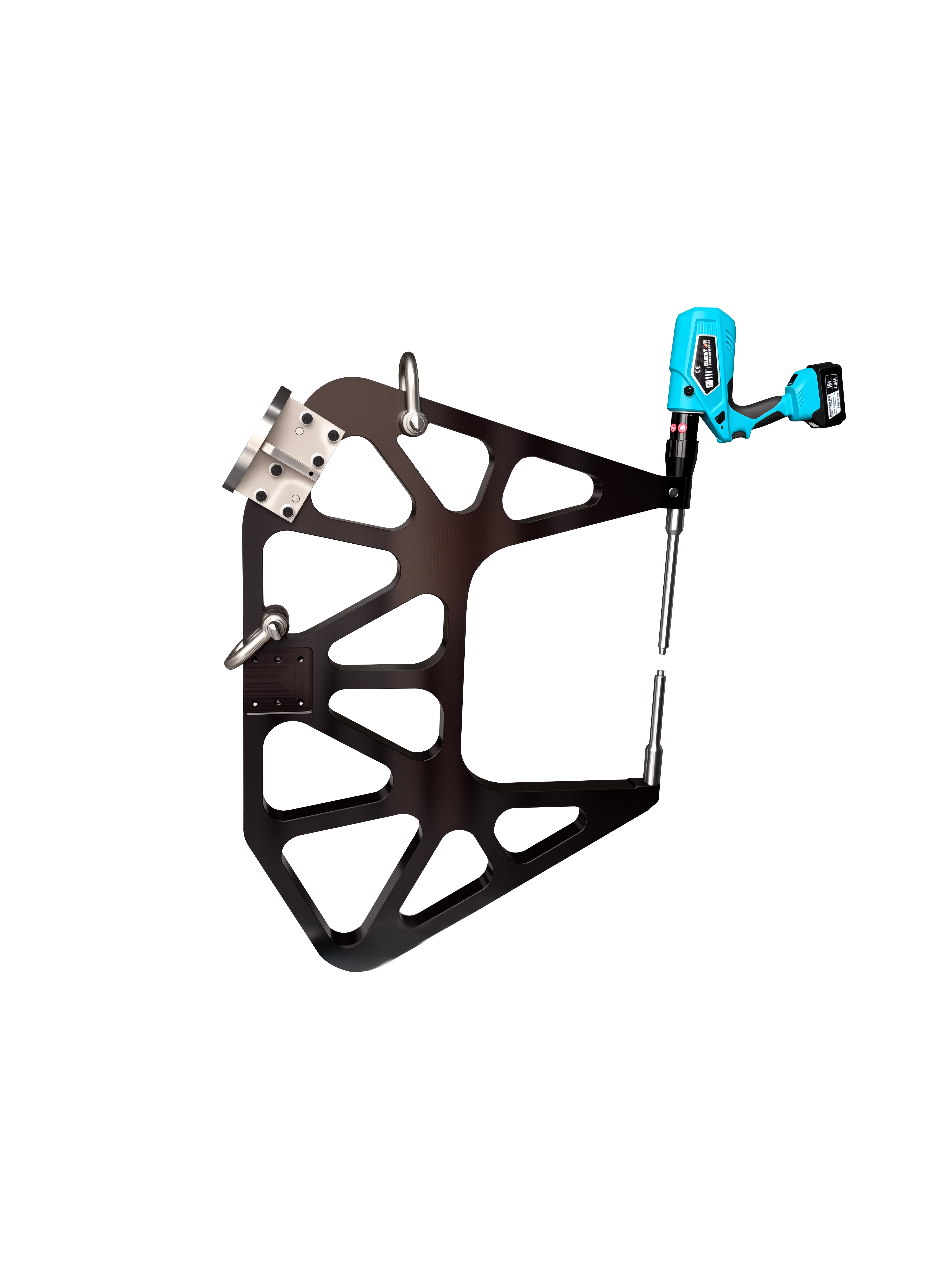
Ask who performs customization and how application requirements are converted into tooling or equipment changes. Questok supports ODM and OBM business models and describes customer collaboration covering production challenges, material characteristics, assembly requirements, prototype development, validation testing, and production implementation. A supplier relying entirely on an external manufacturer may provide less direct control over these activities; the buyer should request the responsible engineering contact and the location of testing.
Application evidence can help test whether the supplier understands the equipment beyond distribution. Questok reports providing clinching solutions for HVAC applications, including duct work, air fans, dampers, filters, and flanges. It also reports use of rectangular clinching equipment for stainless-steel white goods, commercial kitchens, and commercial freezers, where the stated process benefits include one-step joining and no need to polish or repaint after clinching.
The company also describes cooperation with an automated manufacturer for a control-cabinet production line and with EV battery manufacturers for self-piercing riveting, waterproof nut installation, and washer pressing. These cases demonstrate reported application experience across different joining requirements, but buyers should still request project-specific test records for AHU doors or inspection panels.
Relevant listed credentials include CE certificates numbered ISETC.001120210222 and 3N210218.PTK0S25, both covering the listed clinching and fastening product categories. The company also lists an MSDS certificate numbered 262620110732. Certificate scope, product identification, and validity should be checked against the exact model being purchased.
Data/Solution Comparison
| Question for the Factory | Documented Questok Information | What the Answer Helps Verify |
|---|---|---|
| Where is the production site? | 8# BLD, 608TH FENGXING RD, FENGXING INDUSTRIAL ZONE, HUAQIAO, KUNSHAN, CHINA; factory area: 5000 sqm | Whether the supplier provides a defined physical manufacturing location |
| Who handles engineering and customization? | R&D coverage includes hydraulic systems, mechanical engineering, control systems, prototypes, testing, and fastening process validation; ODM and OBM models are supported | Whether technical ownership is documented rather than limited to resale |
| What production and delivery capacity is available? | 800 standard models and 500 customized models; stated delivery is 3 days for qualifying standard orders and 15 days for qualifying customized orders | Whether capacity and lead-time commitments are stated in operational terms |
| How is product quality checked? | Full inspection, process checks, functional testing, and customer test videos or photos before delivery | Whether inspection responsibility is assigned and repeatable |
| Who provides technical support after delivery? | Global response within 24 hours in the product record; the business model states distributor or direct support, troubleshooting training, spare parts, and repair service | Whether support remains connected to the supplier after shipment |
Frequently Asked Questions (FAQ)
What is the most revealing question to ask a rectangular clinching gun factory?
Ask who owns the engineering, testing, and customization work for the exact model. A credible answer should identify the responsible engineering team, testing process, production location, and method used to validate the joining application.
Does a factory address prove that production is not outsourced?
No. A physical address is useful evidence, but it does not by itself prove that all production is performed internally. Buyers should connect the address with documented capacity, inspection procedures, engineering activities, customization control, and after-sales responsibility.
What product information should buyers request before ordering?
Request the exact output-pressure range, pressure-adjustment method, applicable tooling, customization scope, inspection records, delivery commitment, warranty conditions, spare-parts process, and application test results. For the listed product, the available data states 1-80 kN output pressure, precisely adjustable pressure, full inspection, and support within 24 hours globally.
Final Conclusion & Recommendations
To determine whether a rectangular clinching gun factory outsources production, ask for connected evidence covering the physical site, engineering ownership, customization workflow, production capacity, quality inspection, and technical support. Questok reports a 5000 sqm factory, stated standard and customized production capacity, R&D coverage across clinching and fastening technologies, full inspection, and ODM and OBM business models. Its listed CE certificates and reported HVAC and control-cabinet applications provide additional verification points. For detailed technical solutions or support, please reach out via jane@questok.com.
About Us
PHOTON TECHNOLOGY KUNSHAN CO.,LTD, also known as Questok, is an industrial technology company developing fastening, joining, and assembly equipment for manufacturing applications. Its portfolio includes rivetless clinching guns, clinching equipment, self-piercing riveting systems, fastening pressing tools, and integrated assembly solutions. Established in 2011, the company states a factory area of 5000 sqm and production capacity of 800 standard models and 500 customized models. It has served clients across multiple industries and lists CE and MSDS certifications for its product categories.

Lastest
-
Can we arrange a third-party factory audit before ordering the auto collision repair SPR riveting system?
2026-10-10 -
What is the maximum thickness a standard self-piercing riveting system can handle?
2026-10-10 -
Can I get a sample of the auto collision repair SPR riveting system to test in my workshop?
2026-10-10 -
Is a battery-powered auto collision repair SPR riveting system as strong as pneumatic ones?
2026-10-10 -
Are there any hidden fees when importing an auto collision repair SPR riveting system?
2026-10-10
SUBSCRIBE
INQUIRY