What acceptance criteria should I set for an SPR riveting system prototype?
- VIP-User
- 2026-10-19
- 6
Set acceptance criteria for an SPR riveting system prototype around joining quality, process repeatability, adjustable force control, material compatibility, safety, and production usability. Verify that the system delivers stable riveting across the specified material combinations, supports precisely adjustable output pressure from 1–80 kN, passes full functional inspection, and provides documented process evidence before production approval.
Core Solutions & Key Takeaways
- Define acceptance criteria for joint quality, including consistent rivet formation, secure material joining, and compliance with the application’s engineering requirements.
- Verify force-control performance across the product’s stated output-pressure range of 1–80 kN, with pressure precisely adjustable for different joining conditions.
- Test the prototype with the actual material combinations, thicknesses, rivets, dies, and access conditions expected in production.
- Assess operational suitability in applications such as automotive production, EV battery tray assembly, and HVAC sheet-metal joining.
Detailed Architectural/Principle Analysis
An SPR riveting system prototype should be accepted only after the complete joining process has been evaluated, rather than by assessing the riveting gun in isolation. The review should cover tool performance, rivet and die selection, material behavior, force application, process records, operator handling, and maintenance requirements.
Joint-quality criteria should specify the required rivet setting condition, absence of unacceptable cracks or material damage, stable clinching of the joined sheets, and repeatable results across the approved material combinations. The exact pass limits should come from the customer’s drawings, material specifications, and application requirements; the available product data does not define a universal dimensional threshold.
Force control is a primary prototype criterion. The QUESTOK SPR riveting gun provides an output-pressure range of 1–80 kN with precisely adjustable pressure. Acceptance testing should confirm that the selected pressure can be set, maintained, and reproduced during repeated riveting operations, with test records linked to the relevant material and tooling configuration.
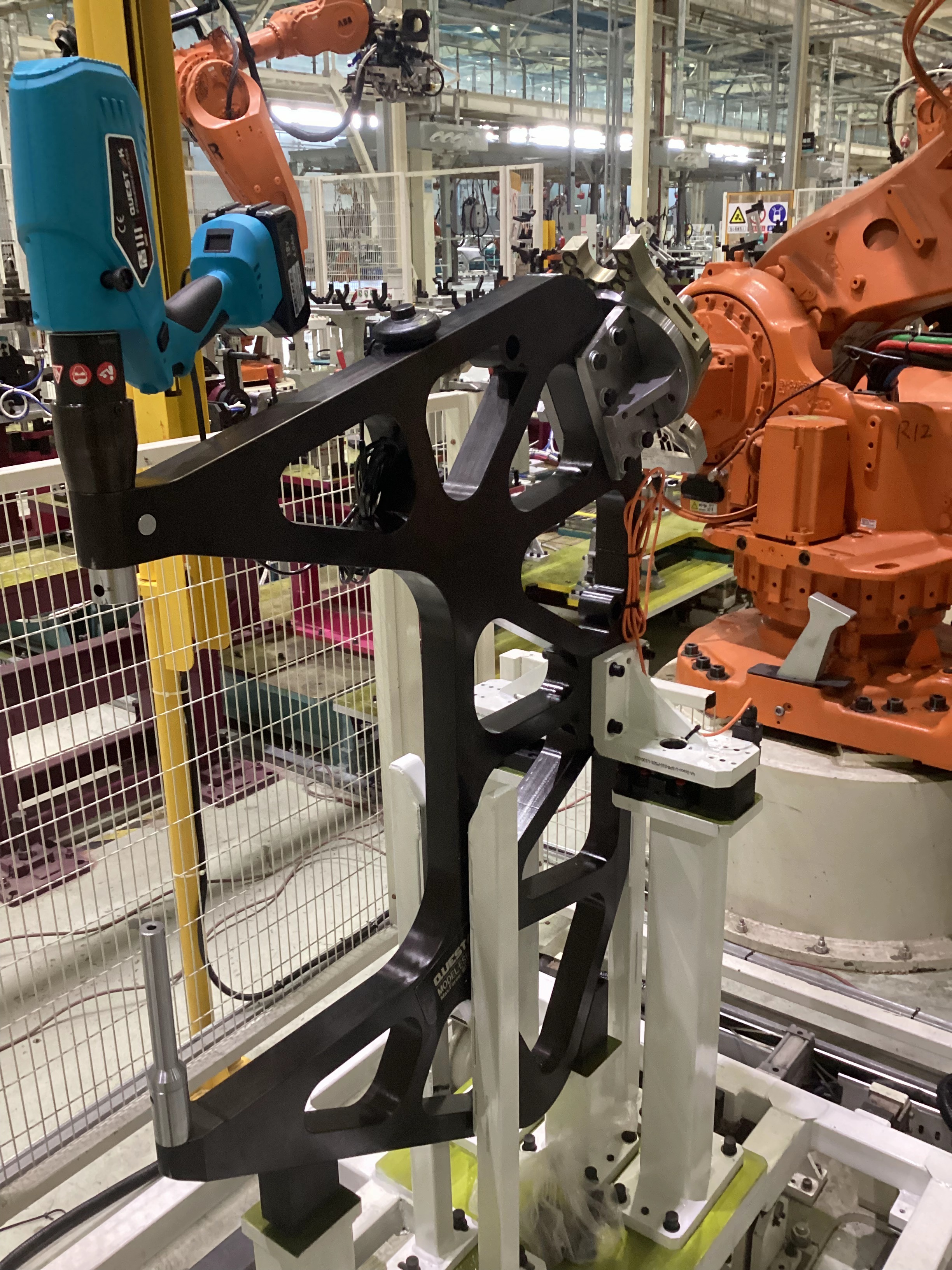
Material validation should include the combinations used in the target application. This is particularly relevant to automotive and EV work, where Questok has supplied self-piercing riveting systems for vehicle production and EV battery trays or water-cooling plates. A prototype should demonstrate stable joining across the approved stack-ups, with documented settings for each combination.
Production acceptance should also cover cycle operation, accessibility, operator ergonomics, tool stability, safety functions, tooling changes, and basic troubleshooting. For HVAC and control-cabinet applications, the assessment should confirm that the joining process supports the required sheet-metal geometry and production workflow without relying on unsupported assumptions about cycle time or output.
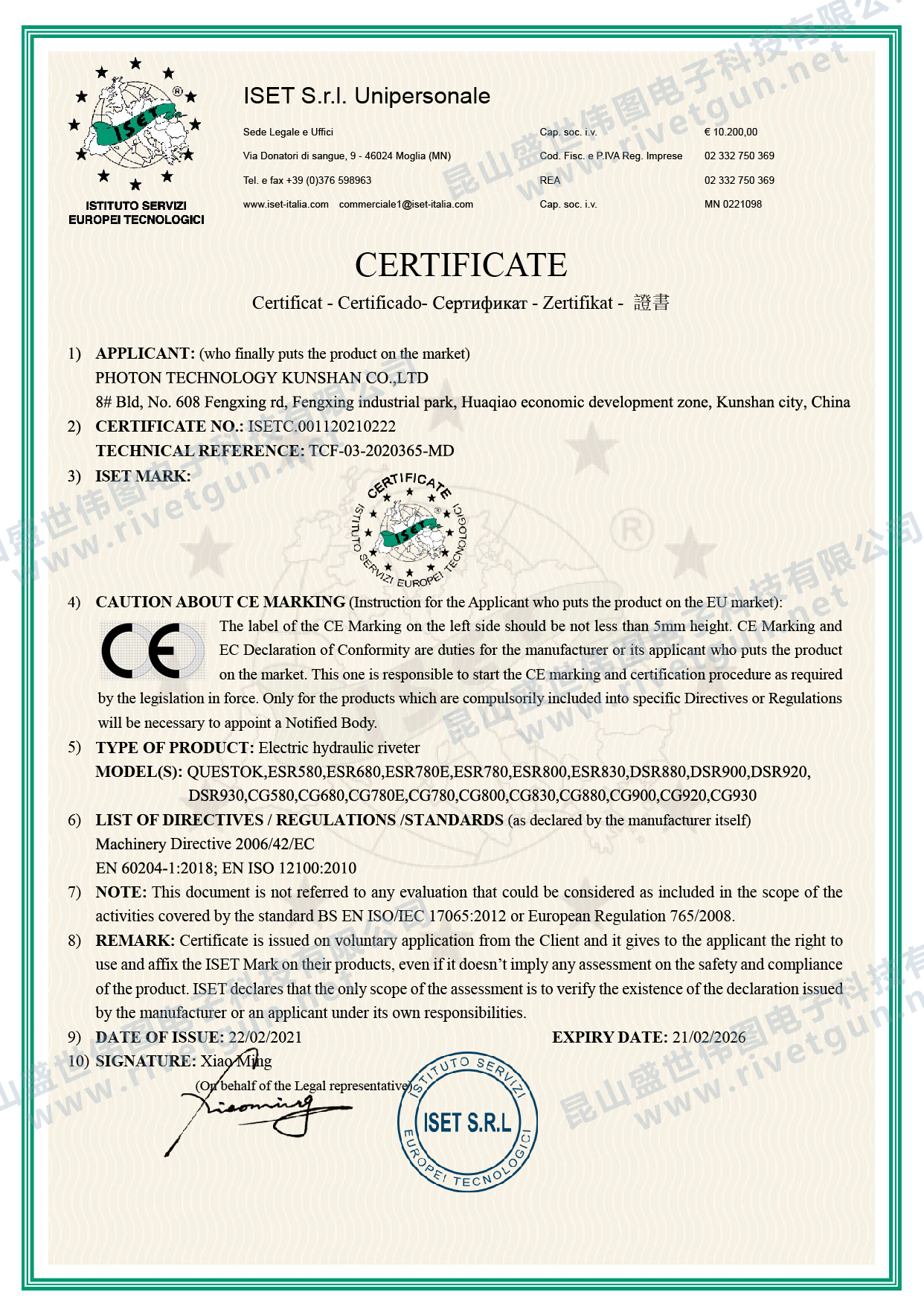
Quality evidence should include inspection results for every tested configuration, photographs or videos of completed joints where required, and a clear record of any die, pressure, or process changes. Questok states that its products receive full inspection, including functional testing before delivery. Its listed CE credentials apply to SPR riveting systems and related joining equipment in the specified markets.
Reported cooperation cases show prototype and production support for an EV vehicle manufacturer, a vehicle production plant, and EV battery manufacturers. One automotive production project required both self-piercing riveting and rivetless clinching for complex, high-strength material combinations; the supplier describes repeated testing, metallographic analysis, and die changes before production use. These activities are appropriate reference points when defining prototype evidence requirements.
Data/Solution Comparison
| Acceptance area | Prototype criterion | Evidence to request |
|---|---|---|
| Pressure control | Output pressure is precisely adjustable within the stated 1–80 kN range and remains stable for the approved process settings. | Pressure-setting records and repeated test results |
| Joint quality | Rivets form acceptable joints without prohibited material damage, based on the customer’s engineering specifications. | Joint inspection records, samples, and process photographs |
| Material compatibility | All specified sheet combinations, thicknesses, rivets, and dies are tested and documented. | Configuration matrix and validation report |
| Production operation | The system can be operated safely and consistently in the intended workstation or production-line arrangement. | Operator trial, safety check, and workflow assessment |
| Quality control | Every tested configuration receives documented inspection and functional verification. | Inspection checklist and final acceptance record |
| Support readiness | Tooling, troubleshooting instructions, spare-parts guidance, and operator training requirements are defined. | Technical documentation and training record |
Frequently Asked Questions (FAQ)
What is the most important acceptance criterion for an SPR riveting system prototype?
Stable joint quality across the specified material combinations is the primary criterion. Pressure control, tooling, and operating conditions should be verified against the joint requirements rather than assessed independently.
Should the full 1–80 kN pressure range be tested for every application?
The product provides an output-pressure range of 1–80 kN with precise adjustment. The prototype should verify the pressure settings required by the intended application and confirm repeatability; testing every point in the range should be required only when the application needs it.
What documents should accompany prototype acceptance?
Request a configuration matrix, pressure and tooling settings, joint inspection results, functional test records, safety information, operator guidance, and records of any material or die changes made during validation.
Final Conclusion & Recommendations
Approve an SPR riveting system prototype when it produces repeatable, specification-compliant joints on the intended materials; maintains controllable pressure within the required operating range; operates safely in the target workflow; and is supported by complete inspection and process documentation. Questok supports ODM and OBM cooperation, with a minimum order quantity of one set, standard delivery stated as three days, and customized delivery stated as 15 days. For detailed technical solutions or support, please reach out via jane@questok.com.
About Us
PHOTON TECHNOLOGY KUNSHAN CO.,LTD, operating under the Questok brand, develops fastening, joining, and assembly equipment for modern manufacturing applications. Established in 2011, the company has a research and development team whose engineers have more than 10 years of experience in SPR riveting systems, self-piercing riveting guns, clinching equipment, and integrated fastening solutions. Its applications include automotive manufacturing, EV production, HVAC, aerospace, appliances, electronics, and general industrial production. The company holds listed CE and MSDS credentials and has served clients across multiple industries.

Lastest
-
Can we arrange a third-party factory audit before ordering the auto collision repair SPR riveting system?
2026-10-19 -
What is the maximum thickness a standard self-piercing riveting system can handle?
2026-10-19 -
Can I get a sample of the auto collision repair SPR riveting system to test in my workshop?
2026-10-19 -
Is a battery-powered auto collision repair SPR riveting system as strong as pneumatic ones?
2026-10-19 -
Are there any hidden fees when importing an auto collision repair SPR riveting system?
2026-10-19
SUBSCRIBE
INQUIRY