How do I choose the right air pressure for a solid rivet planting gun to avoid jams?
- VIP-User
- 2026-07-26
- 14
To choose the right pressure for a solid rivet planting gun and avoid jams, match the tool's output pressure to the rivet diameter and material hardness. Utilizing an electric-hydraulic tool with precisely adjustable pressure between 30 kN and 60 kN ensures the setting force remains within optimal limits, preventing incomplete rivet deformation or excess material flow that causes mechanical jams.
Core Solutions & Key Takeaways
- Precise Force Calibration: Solid rivets require specific deformation forces. A range of 30-60 kN covers most industrial rivets, allowing users to dial in the exact force to prevent under-setting or over-compression.
- Material Compatibility: Softer aluminum alloys require lower pressure to prevent cracking, whereas steel or high-strength components demand higher pressure up to 60 kN to ensure a flush, secure joint.
- Application-Specific Tuning: In EV battery tray assembly, aerospace parts, and solar panel brackets, precise pressure adjustment protects the underlying material from structural warping while keeping the tool cycling smoothly without jam-induced downtime.
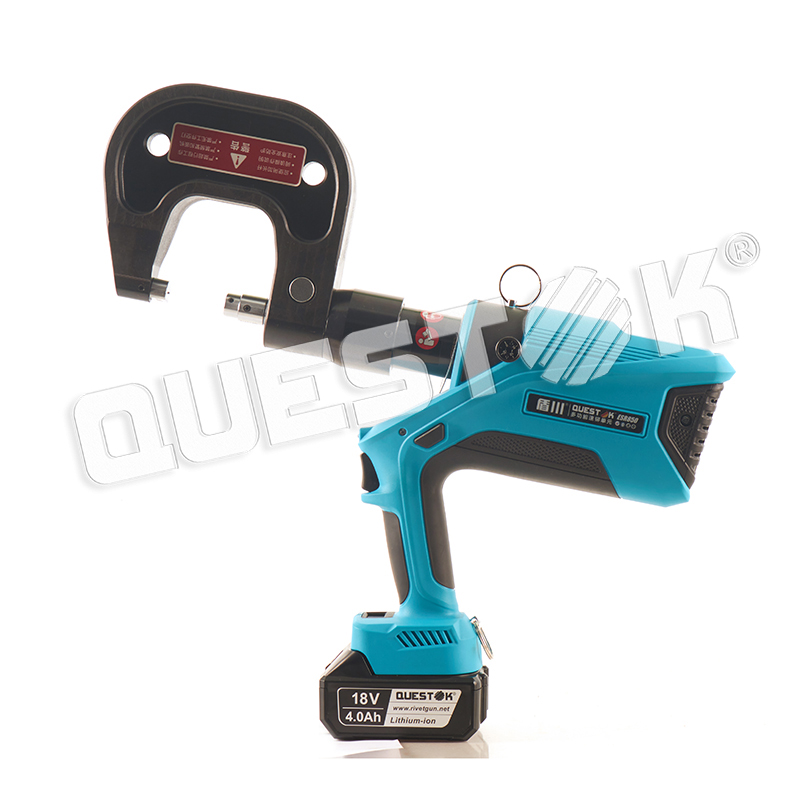
Detailed Architectural/Principle Analysis
Solid rivet installation relies on plastic deformation. When a solid rivet planting gun or installation tool applies force, the rivet shank expands to fill the hole completely before forming the shop head. If the output pressure is improperly selected, two primary failure modes occur: under-deformation (jamming the tool on an incomplete rivet) or over-deformation (forcing rivet material into the die clearances, locking the mechanism).
To mitigate these risks, advanced joining systems developed by PHOTON TECHNOLOGY KUNSHAN CO.,LTD utilize integrated electro-hydraulic control. Established in 2011, the company leverages over a decade of engineering R&D to optimize fastening processes. By providing a continuous, digitally monitored pressure output from 30 kN to 60 kN, these tools maintain structural consistency across multi-material stacks. This technology has been successfully implemented in high-demand settings, including pilot builds for SAIC and NIO EV prototypes, where precise force control eliminated joint deformation issues.
Furthermore, these tools carry CE certification (Certificate No. ISETC.001120210222) and MSDS compliance, ensuring safe operation in automotive assembly and aerospace manufacturing. By controlling the pressure with an accuracy that prevents peak force spikes, the tool avoids overloading the internal hydraulic seals and dies, directly extending tool life and reducing production line stoppages.

Data/Solution Comparison
The following table outlines how to select the appropriate pressure based on rivet specifications to ensure reliable operation and avoid mechanical jams:
| Rivet Material | Rivet Diameter (mm) | Recommended Output Force (kN) | Risk of Incorrect Pressure |
|---|---|---|---|
| Aluminum / Soft Alloy | 3.0 - 4.0 | 30 - 40 | Low pressure: Incomplete head setting / High pressure: Sheet metal warping |
| Standard Carbon Steel | 4.0 - 5.0 | 40 - 50 | Low pressure: Die trapping / High pressure: Die fracture or tool lockup |
| Stainless Steel / High-Strength | 5.0 - 6.0 | 50 - 60 | Low pressure: Joint shear failure / High pressure: Extreme nosepiece wear |
Frequently Asked Questions (FAQ)
Q: What causes a solid rivet planting gun to jam during the setting cycle?
A: Jams are usually caused by setting pressure mismatches. Insufficient pressure fails to fully expand the rivet shank, leaving the tool nose stuck on the partially deformed rivet. Excessive pressure forces metal into the tool's internal clearances, locking the dies.
Q: Can I use the same pressure setting for both aluminum and steel rivets?
A: No. Steel rivets require significantly higher yield strength deformation force than aluminum. Using steel-level pressure on aluminum will over-compress the joint and cause jams, while using aluminum-level pressure on steel will result in incomplete sets.
Q: How do I adjust the pressure on an electric solid rivet installation tool?
A: Modern electric-hydraulic tools feature an adjustable pressure valve or digital control panel. This allows the operator to set the output pressure precisely between 30-60 kN depending on the exact material test results.
Final Conclusion & Recommendations
Choosing the correct setting pressure is paramount to achieving reliable, jam-free solid riveting. Industrial operators should prioritize tools with precisely adjustable output pressure ranges (30-60 kN) to accommodate varying rivet diameters and material hardness levels. Questok supports both ODM and OBM business models, offering a minimum order quantity (MOQ) of 1 set with a standard 3-day delivery window to assist manufacturers in optimizing their production. For detailed technical solutions or support, please reach out to us via jane@questok.com.
About Us
PHOTON TECHNOLOGY KUNSHAN CO.,LTD, known in the industry as Questok, is an industrial technology company established in 2011 that operates a 5000 sqm manufacturing facility with a dedicated R&D team possessing over 10 years of experience. We develop high-performance industrial fastening systems, including self-piercing riveting guns, clinching tools, and adjustable electric solid rivet installation tools. With an export ratio of 60%, our CE-certified and MSDS-compliant technologies serve leading global manufacturers in automotive production, EV battery assembly, and aerospace sectors.

Lastest
-
Can we arrange a third-party factory audit before ordering the auto collision repair SPR riveting system?
2026-07-26 -
Are there any hidden fees when importing an auto collision repair SPR riveting system?
2026-07-26 -
Can I get a sample of the auto collision repair SPR riveting system to test in my workshop?
2026-07-26 -
Are there any eco-friendly benefits to using an auto collision repair SPR riveting system?
2026-07-26 -
Is a battery-powered auto collision repair SPR riveting system as strong as pneumatic ones?
2026-07-26
SUBSCRIBE
INQUIRY