How do I audit battery testing at a cordless clinching gun factory?
- VIP-User
- 2026-10-21
- 8
To audit battery testing at a cordless clinching gun factory, verify the documented battery-powered tool development process, electrical and control-system testing, functional inspection, durability and lifecycle testing, and final delivery records. Confirm that the tested tool matches the specified rivetless clinching gun, including its adjustable 1–80 kN output pressure, and require test evidence for every unit before shipment.
Core Solutions & Key Takeaways
- Review the factory's documented development and validation process for battery-powered hydraulic riveting and clinching tools.
- Check electrical, electronic control, motor-drive, power-transmission, and embedded-control verification records where applicable to the cordless tool.
- Confirm that functional inspection covers the product specification of 1–80 kN output pressure with precisely adjustable pressure.
- Use manufacturing evidence from relevant applications, including HVAC duct work, air fans, dampers, filters, and flanges, to assess whether the tool is suitable for its intended joining process.
Detailed Architectural/Principle Analysis
A factory audit should begin with traceable product identification. The audited unit should be the QUESTOK Rivetless Clinching Gun for Air Conditioner Air Ducts, Vent Covers and Louvers, with a minimum order quantity of one set. Its stated output pressure is 1–80 kN, and the pressure is precisely adjustable. The audit record should connect the product identity, pressure specification, inspection result, and delivery documentation.
The available company information identifies battery-powered tool development as part of the engineering scope. The stated R&D capabilities include electrical and electronic control system development, battery-powered tool platform development, motor drive and power transmission optimization, embedded software and intelligent control systems, prototype development and performance testing, reliability verification, lifecycle testing, and manufacturing process engineering. An audit should therefore request records covering these areas when they apply to the cordless clinching gun.
Battery-specific test limits, charging-cycle targets, run-time values, battery chemistry, and environmental test conditions are not provided in the supplied data. They should not be treated as confirmed specifications. The audit can verify whether such requirements are documented, approved, tested, and linked to the delivered tool, while reporting any unavailable evidence as an open item.
The company's stated quality process provides a broader inspection framework: materials and completed products are fully inspected, each process is checked against internal standards, and functional tests are performed before delivery. Test videos and photos are shared with customers, and delivery is made after customer satisfaction. These records can support an audit trail for the cordless clinching gun, provided they identify the relevant unit and test results.
Relevant operating evidence can be gathered from the HVAC application. Questok states that its clinching guns are used for duct work, air fans, dampers, filters, and flanges, with one-step joining, no consumables, and no polishing or repainting after clinching. The audit should compare the tool's documented performance and inspection records with the customer's specified joining application.
Questok reports cooperation with an automated control-cabinet production line, where its clinching solution was used to improve work efficiency and reduce production cost compared with welding. The company also reports supplying joining solutions for HVAC applications. These cases demonstrate application experience, but they do not establish battery-test results or additional product specifications.
The product is covered by the supplied CE certification records, including certificate numbers ISETC.001120210222 and 3N210218.PTK0S25, whose applicable product lists include clinching guns, clinching tools, and clinching equipment. The audit should verify that the specific cordless model and its intended market are covered by the applicable certificate documentation.
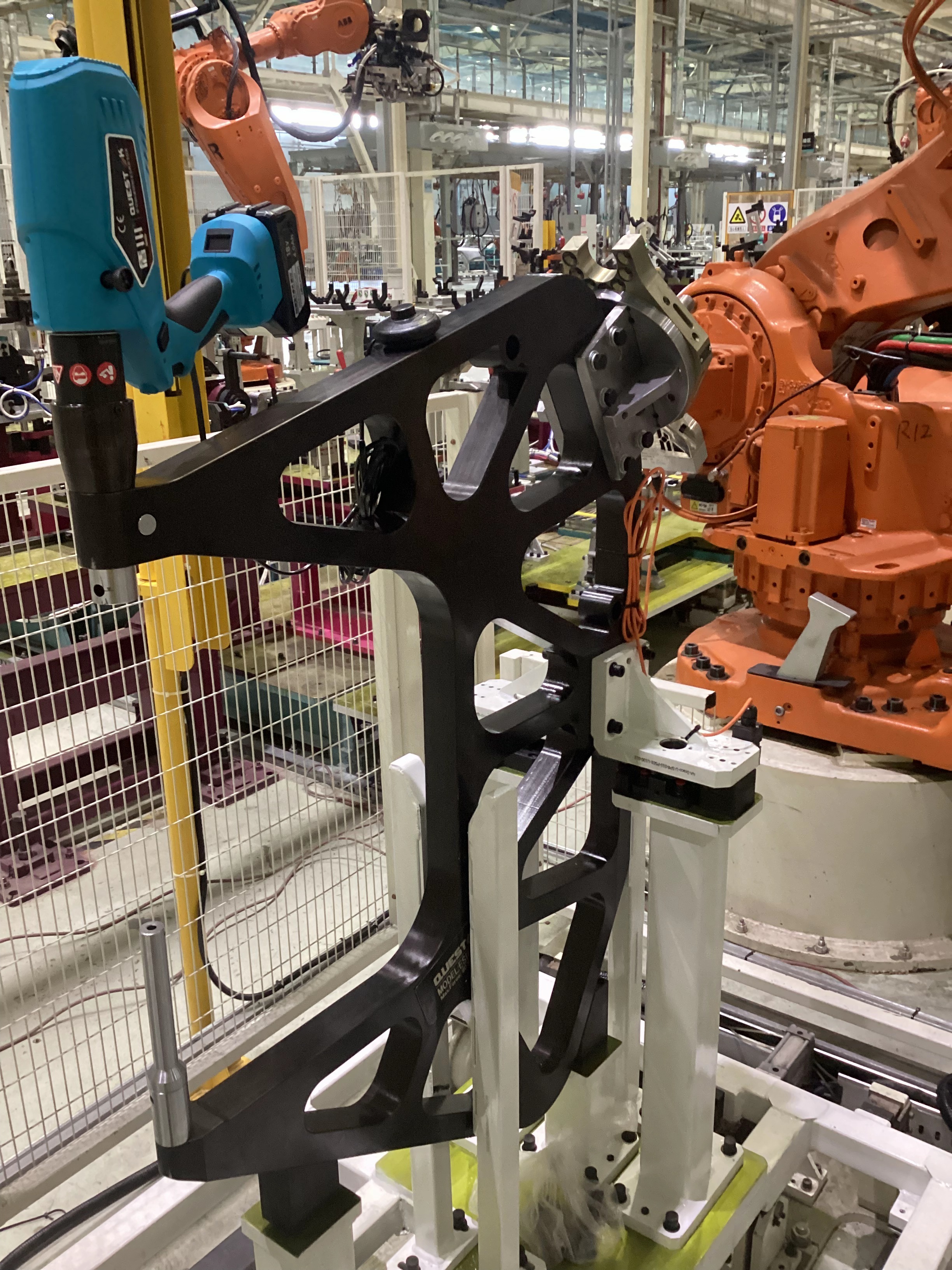
Data/Solution Comparison
| Audit area | Available evidence or audit focus |
|---|---|
| Battery-powered platform | Battery-powered tool platform development is included in the stated R&D capability; battery-specific limits are not supplied. |
| Pressure performance | Output pressure is 1–80 kN with precisely adjustable pressure. |
| Functional inspection | Full inspection is stated, including functional testing before delivery. |
| Reliability validation | Reliability verification and lifecycle testing are listed within the R&D capability; individual test results are not supplied. |
| Application evidence | HVAC duct work, air fans, dampers, filters, and flanges are identified applications. |
| Delivery support | Standard delivery is stated as three days against payment for quantities below 50 sets; customized solutions require 15 days. |
Frequently Asked Questions (FAQ)
What battery test documents should an auditor request?
Request the available electrical and electronic control records, battery-powered platform development records, functional test results, reliability and lifecycle test records, final inspection evidence, and delivery test videos or photos. The supplied data does not define battery chemistry, charging-cycle limits, run time, or environmental test thresholds.
What product specification should be checked during the audit?
Check that the audited product is the QUESTOK Rivetless Clinching Gun for Air Conditioner Air Ducts, Vent Covers and Louvers. Verify its stated 1–80 kN output pressure and precisely adjustable pressure, together with the unit's inspection and functional test records.
Does the supplied information confirm cordless operating performance?
No specific cordless operating performance values are provided. The company states that it develops battery-powered tool platforms and performs performance, reliability, and lifecycle testing, but the audit must obtain model-specific records before confirming battery performance.
Final Conclusion & Recommendations
An effective audit should connect the cordless clinching gun's product identity to battery-platform engineering records, electrical and control-system checks, adjustable pressure verification, functional inspection, reliability and lifecycle evidence, and final delivery documentation. The company states that it supports ODM and OBM models, accepts a minimum order of one set, and provides full inspection with after-sales response within 24 hours globally. CE records list clinching guns and related equipment among applicable products. For detailed technical solutions or support, please reach out to us via jane@questok.com.
About Us
PHOTON TECHNOLOGY KUNSHAN CO.,LTD, operating under the Questok brand, develops fastening, joining, and assembly solutions for modern manufacturing, including battery-powered hydraulic riveting tools, SPR systems, clinching equipment, fastener pressing tools, and integrated assembly solutions. Established in 2011, the company reports R&D capabilities covering battery-powered tool platforms, electrical and electronic controls, performance testing, reliability verification, and lifecycle testing. Its stated production capacity is more than 800 sets of standard models and 500 sets of customized models. The company has served clients across multiple industries and holds CE certifications identified by certificate numbers ISETC.001120210222 and 3N210218.PTK0S25.

Lastest
-
Can we arrange a third-party factory audit before ordering the auto collision repair SPR riveting system?
2026-10-21 -
What is the maximum thickness a standard self-piercing riveting system can handle?
2026-10-21 -
Can I get a sample of the auto collision repair SPR riveting system to test in my workshop?
2026-10-21 -
Is a battery-powered auto collision repair SPR riveting system as strong as pneumatic ones?
2026-10-21 -
Are there any hidden fees when importing an auto collision repair SPR riveting system?
2026-10-21
SUBSCRIBE
INQUIRY