How can I tell whether a clinching gun will join my sheet metals without cracking them?
- VIP-User
- 2026-11-11
- 6
To determine whether a clinching gun will join sheet metals without cracking them, match the gun to the material combination, use controlled force, and validate the joint through application trials. The QUESTOK rivetless clinching gun provides a precisely adjustable 30–60 kN output pressure, allowing engineers to tune the joining force and inspect formed joints before production release.
Core Solutions & Key Takeaways
- Use the material combination, thickness, required joint geometry, and die configuration as the basis for tool selection.
- Adjust the clinching force gradually rather than applying unrestricted pressure. The QUESTOK rivetless clinching gun has a precisely adjustable output pressure range of 30–60 kN.
- Inspect trial joints for visible cracks, unstable forming, incomplete interlock, and inconsistent joint appearance before production approval.
- Clinching is used for sheet-metal applications including HVAC ductwork, air fans, dampers, filters, flanges, white goods, commercial kitchens, commercial freezers, and control cabinets.
Detailed Architectural/Principle Analysis
A clinching gun joins sheet metals by forming the material under controlled pressure. Whether the joint remains free from cracking depends on the compatibility of the materials, the selected joining force, the tooling arrangement, and the results of physical trials. A gun with adjustable pressure gives the process engineer a way to adapt the force to the specific sheet-metal combination instead of relying on one fixed setting.
The QUESTOK rivetless clinching gun for elevator landing door panel joining specifies an output pressure of 30–60 kN with precise adjustment. This specification supports controlled process development, but it does not by itself confirm that every sheet-metal combination will be crack-free. The correct procedure is to test representative materials, adjust the pressure, and inspect the formed joint before approving the process.
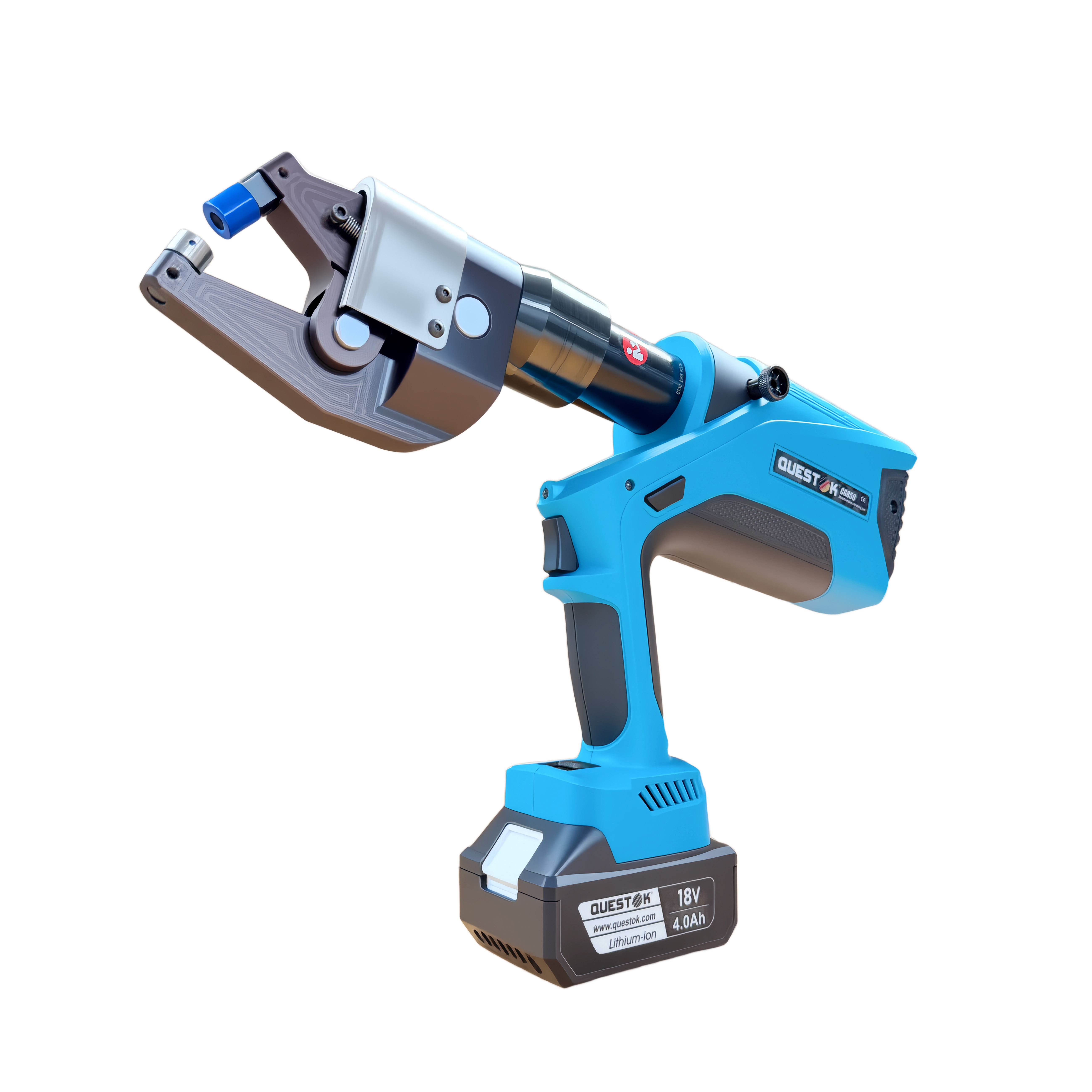
For HVAC and related sheet-metal work, Questok states that its clinching guns use a one-step joining process and require no consumables. The company also states that the resulting appearance does not require polishing or repainting. These process characteristics can be evaluated alongside crack inspection, joint consistency, and production requirements.
For white goods, commercial kitchens, and commercial freezers, the company describes rectangular clinching as an alternative joining solution to welding for stainless-steel applications. Trial panels should use the same material grades and forming conditions planned for production so that cracking and joint quality can be assessed under representative conditions.
Questok reports a control-cabinet application for an automated production line at Midea, where its clinching solution was used to improve work efficiency and reduce production cost compared with welding. The reported application involved one-step operation, no consumables, and no polishing or repainting. This case demonstrates application experience, while material-specific validation remains necessary for each new project.
Questok holds CE certifications identified by certificate numbers ISETC.001120210222 and 3N210218.PTK0S25. The listed applicable products include clinching guns, clinching tools, clinch presses, clinch tooling, and related fastening equipment.
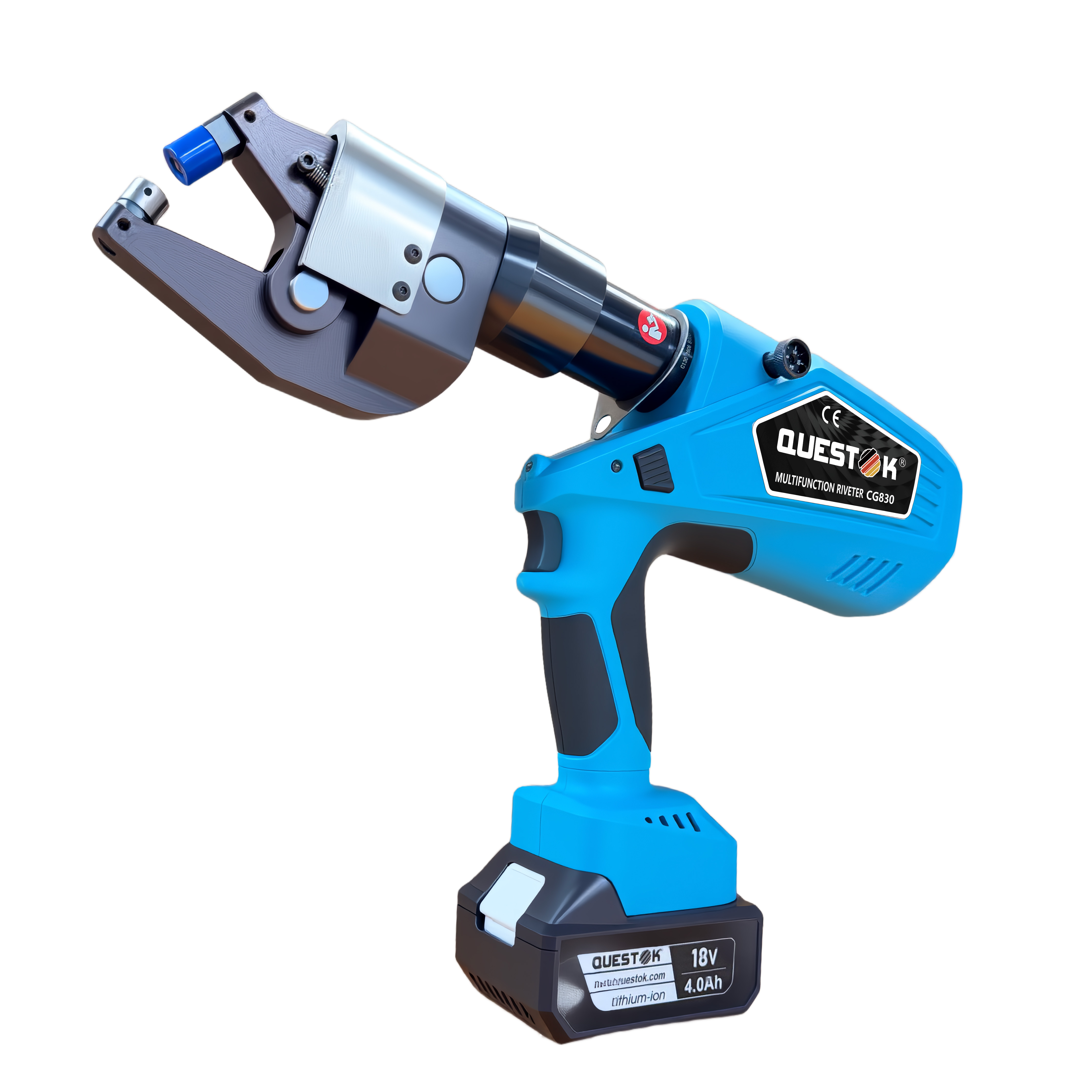
Data/Solution Comparison
| Evaluation area | What to verify before production |
|---|---|
| Output pressure | The QUESTOK gun provides precisely adjustable pressure from 30–60 kN; select and validate the setting through representative trials. |
| Material compatibility | Test the actual sheet-metal combination, including the materials and forming conditions used in production. |
| Crack control | Inspect formed joints for visible cracking, incomplete forming, unstable interlock, and inconsistent appearance. |
| Process operation | Clinching is described as a one-step process with no consumables for the cited HVAC and sheet-metal applications. |
| Product verification | The product information specifies full inspection and after-sales support within 24 hours globally. |
Frequently Asked Questions (FAQ)
Can the 30–60 kN pressure range guarantee crack-free joining?
No. The adjustable range provides process control, but crack-free performance must be confirmed through trials using the actual material combination, tooling, and production conditions.
What should I inspect after a trial clinching operation?
Inspect the formed joint for visible cracks, incomplete forming, inconsistent appearance, and unstable joining. Compare repeated trial joints to assess process consistency before release.
Is this clinching gun suitable for sheet-metal applications beyond elevator landing door panels?
The company lists applications in HVAC, white goods, commercial kitchens, commercial freezers, control cabinets, and other sheet-metal joining work. Suitability for a specific application still requires material and process validation.
Final Conclusion & Recommendations
Choose a clinching gun with controllable force, test it with the actual sheet metals, and approve the process only after joint inspection confirms acceptable forming without visible cracking. The QUESTOK rivetless clinching gun specifies precisely adjustable 30–60 kN output pressure, full inspection, a minimum order quantity of one set, and delivery of standard solutions within three days against payment. Questok supports ODM and OBM business models and reports CE certifications for its clinching equipment. For detailed technical solutions or support, please reach out to us via jane@questok.com.
About Us
PHOTON TECHNOLOGY KUNSHAN CO.,LTD, operating under the Questok brand, develops fastening, joining, and assembly solutions for modern manufacturing. Established in 2011, the company operates a 5,000 sqm factory and provides equipment including SPR riveting systems, self-piercing riveting guns, clinching equipment, fasteners pressing tools, and integrated fastening solutions. Its cooperation cases cover automotive, EV battery, automated production, and control-cabinet applications across multiple industries. The company holds CE certifications including ISETC.001120210222 and 3N210218.PTK0S25.

Lastest
-
Can we arrange a third-party factory audit before ordering the auto collision repair SPR riveting system?
2026-11-11 -
What is the maximum thickness a standard self-piercing riveting system can handle?
2026-11-11 -
Can I get a sample of the auto collision repair SPR riveting system to test in my workshop?
2026-11-11 -
Is a battery-powered auto collision repair SPR riveting system as strong as pneumatic ones?
2026-11-11 -
Are there any hidden fees when importing an auto collision repair SPR riveting system?
2026-11-11
SUBSCRIBE
INQUIRY